

How to Create an API Key
1
Log in and open the Dashboard
Go to app.rootkey.ai and sign in. You will land on the main Dashboard.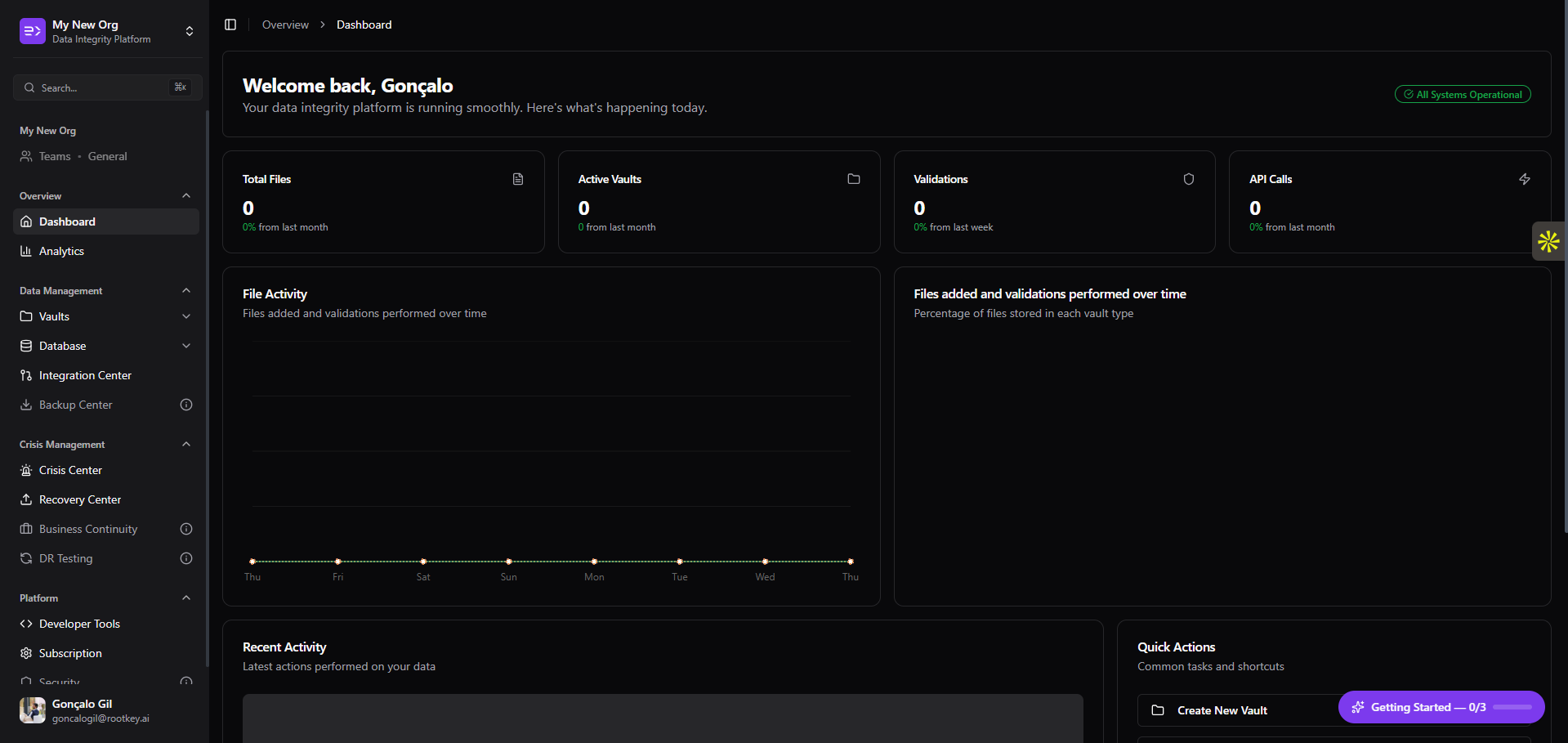
2
Navigate to Developer Tools
In the left sidebar, scroll down to the Platform section and click Developer Tools. The Overview tab shows your active integrations, total request volume, and overall success rate.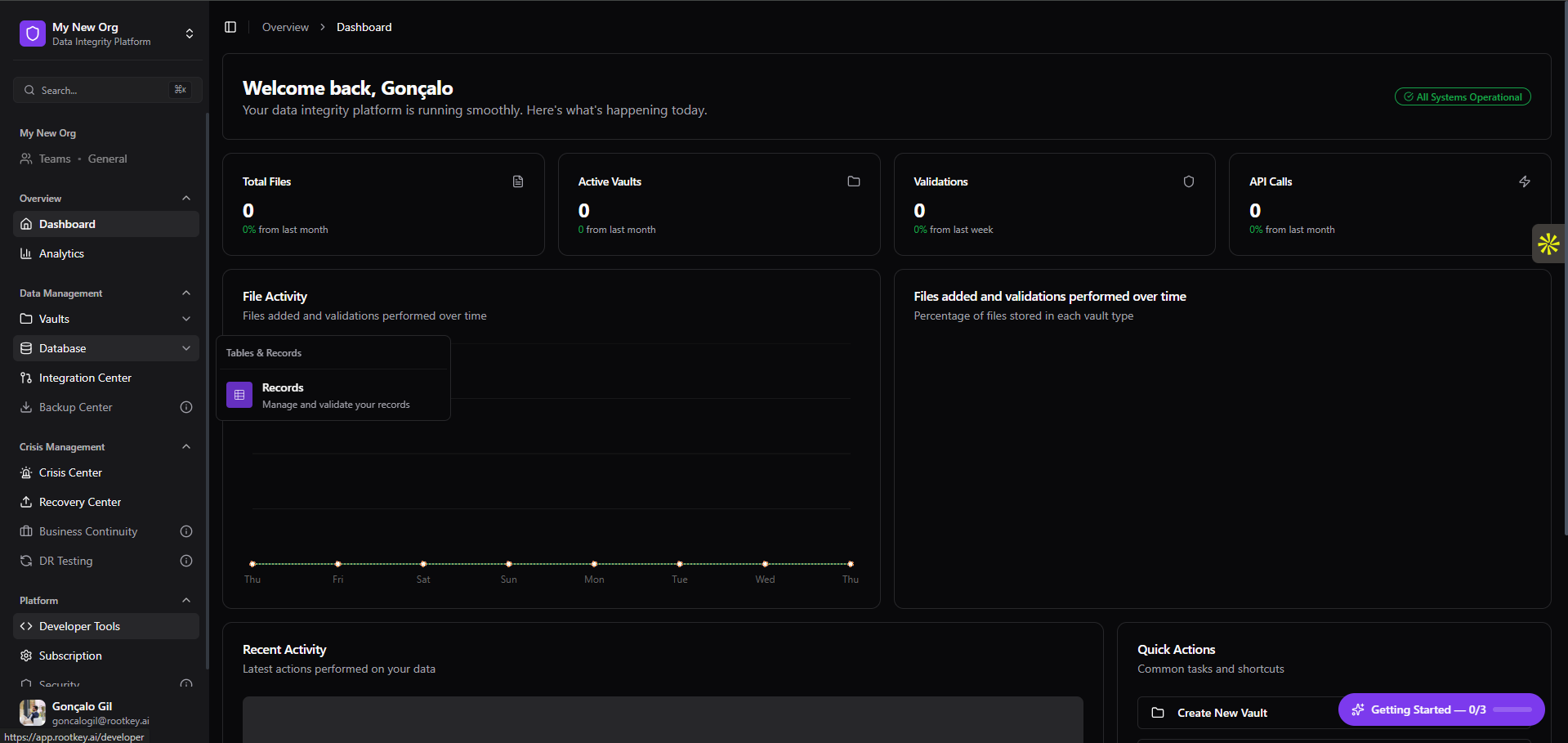
3
Open the API Keys tab
Click the API Keys tab at the top of the Developer Tools panel.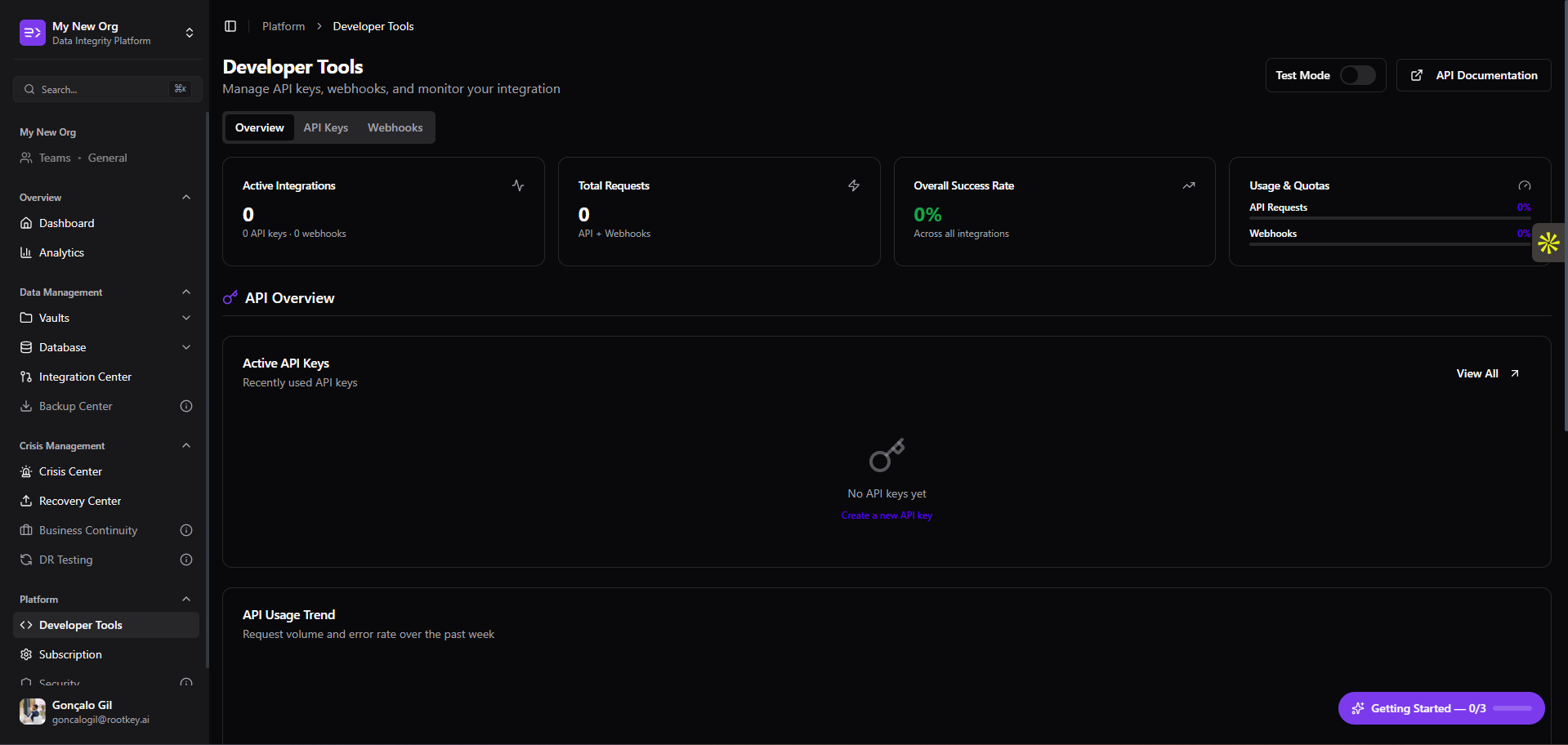
4
Start creating a new key
If no keys exist yet, you will see the empty state. Click + Create API Key in the top right corner to open the creation form.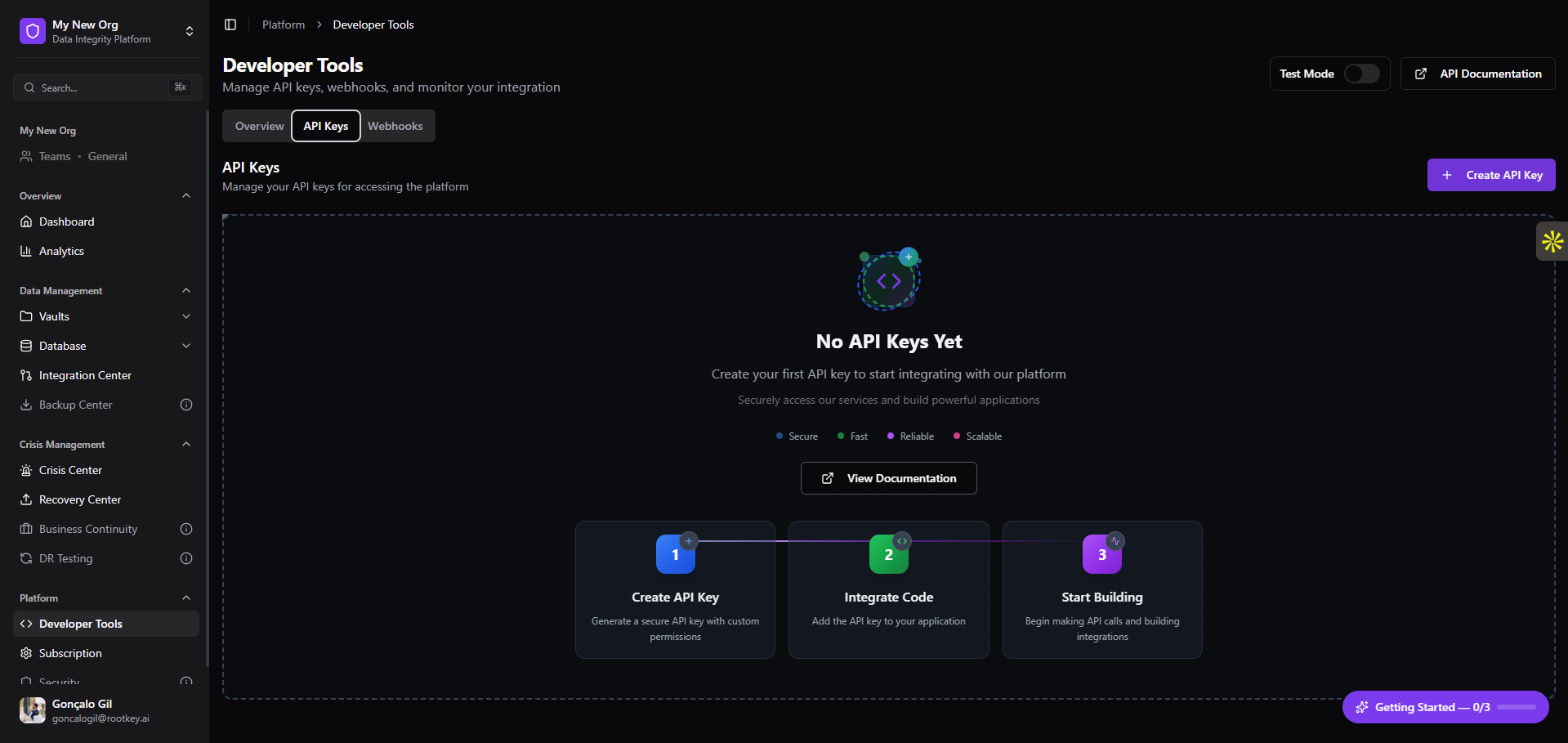
5
Fill in the key details
Enter a Key Name, an optional description, and choose an icon to help identify this key. Click Generate Key when ready.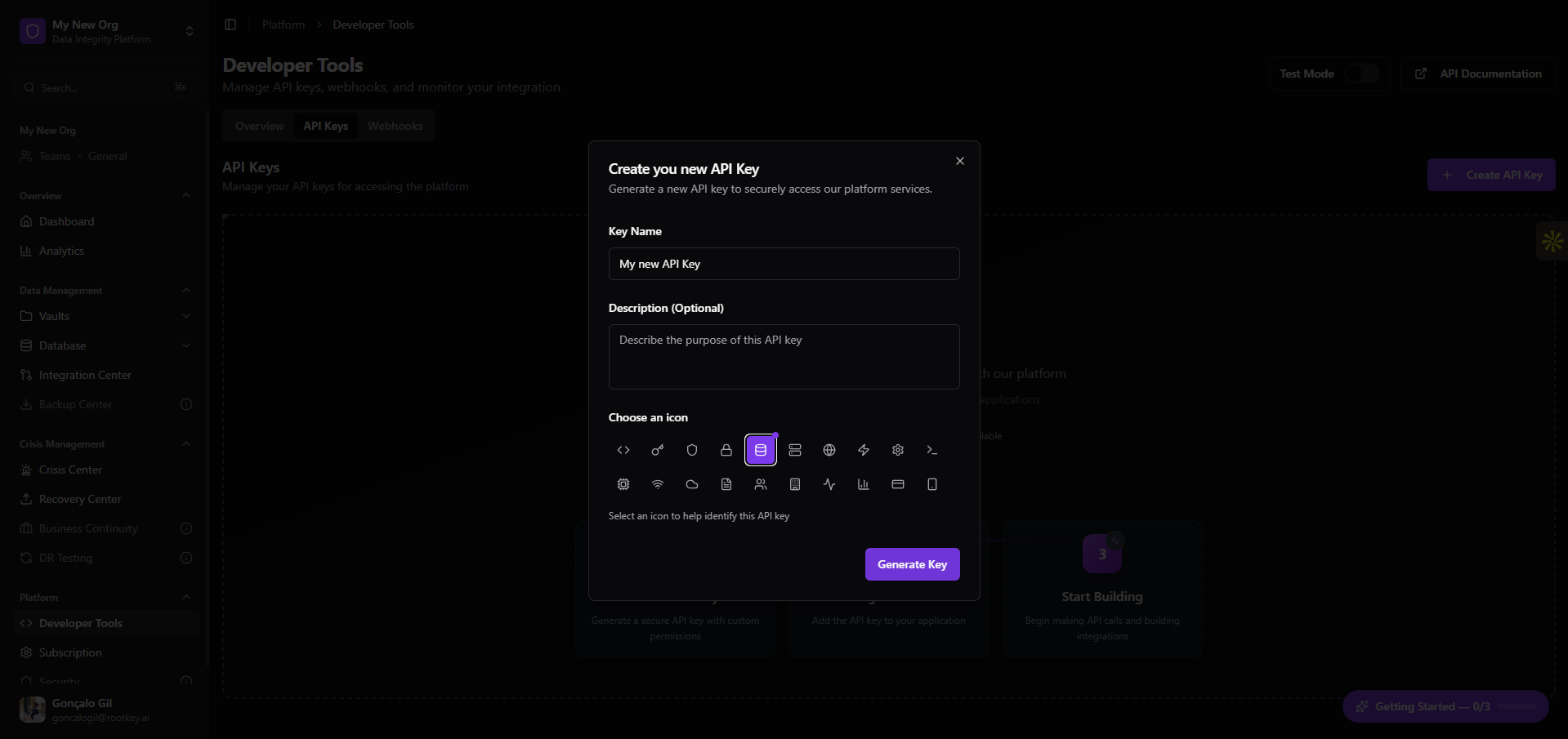
6
Copy and store your key
Your new API key is displayed once. Copy it now and store it in a secure location - it will not be shown again after you close this modal.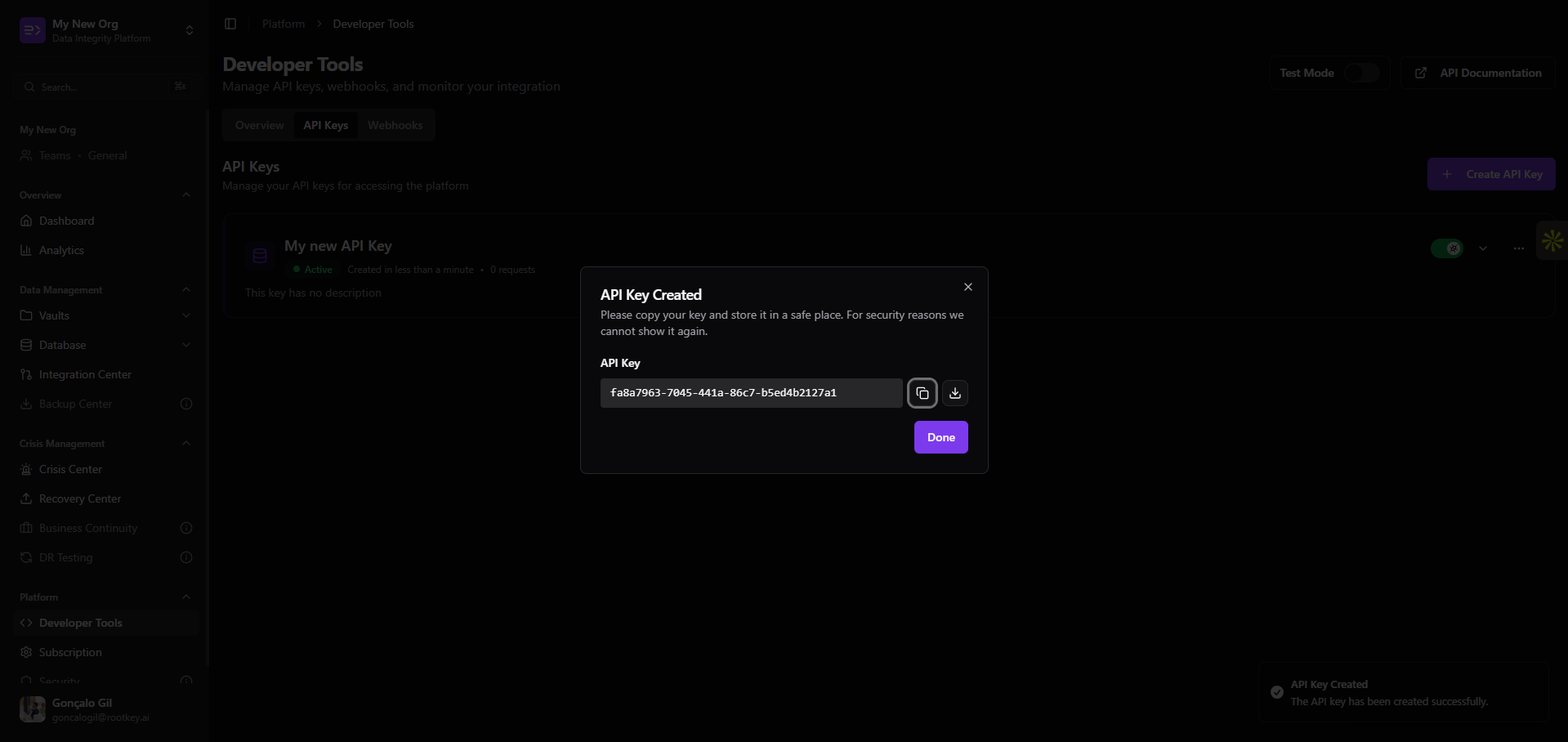
7
Confirm the key is active
After closing the modal, the key appears in the API Keys list with an Active status and a request counter. You are ready to authenticate API calls.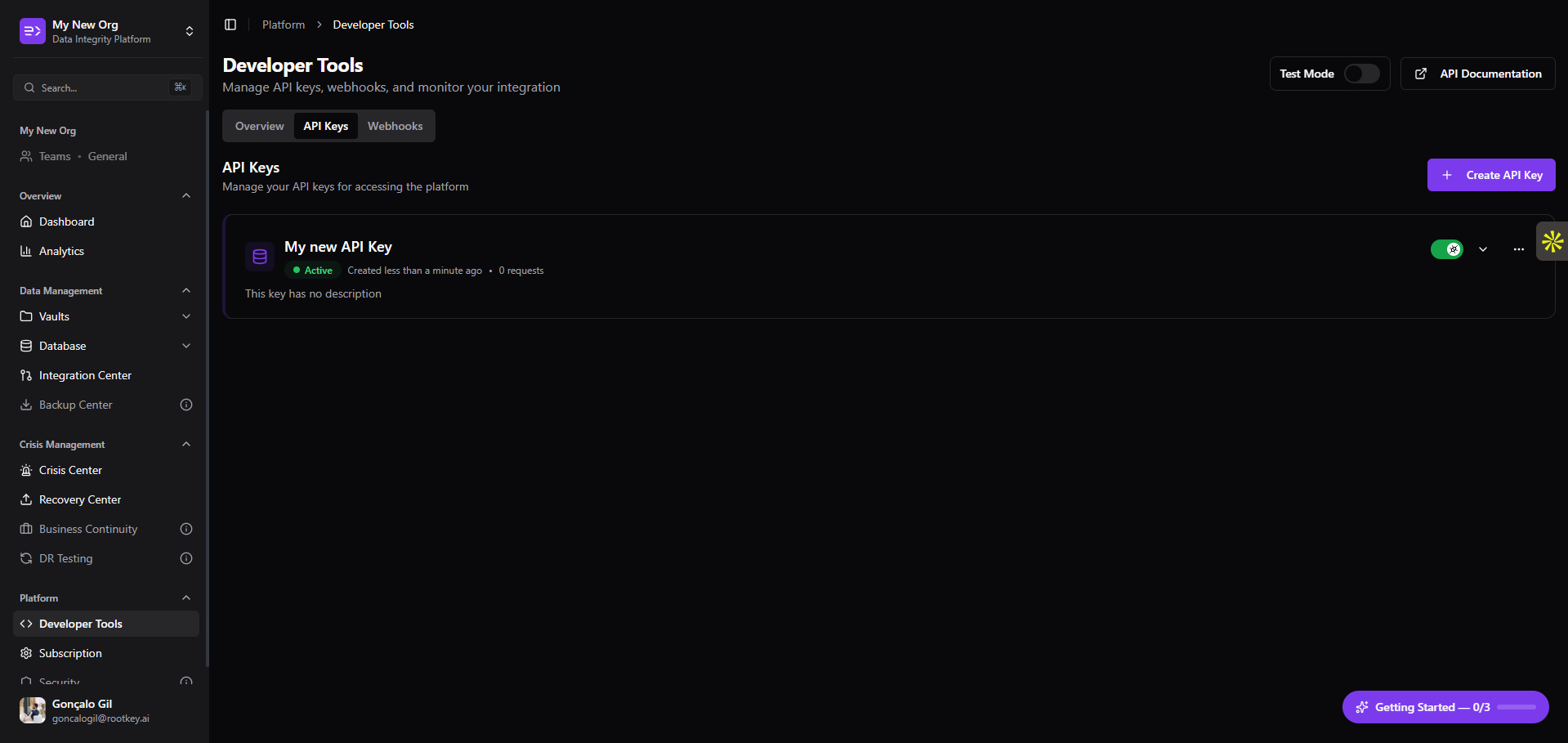
Using Your API Key
Pass the key in thex-api-key header on every request:
Best Practices
Never expose your key in client-side code
Never expose your key in client-side code
API keys grant full access to your workspace. Keep them server-side and use environment variables - never commit them to source control or include them in frontend bundles.
Use one key per integration
Use one key per integration
Create a separate key for each application or environment. This makes it easy to rotate or revoke a single integration without affecting others.
Rotate keys periodically
Rotate keys periodically
Regenerate keys on a regular schedule and immediately on any suspected exposure. Old keys can be revoked from the Developer Tools panel without downtime if a replacement is in place.
Monitor usage
Monitor usage
The Developer Tools Overview tab shows request volume and error rates per key. Unusual spikes may indicate misuse or an integration issue.